Rely on Certified Indoor Air ERMI and HERSTSMI-2 Testing
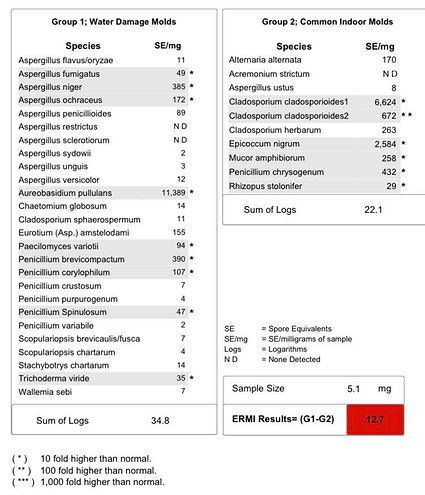
The ERMI (Environmental Relative Moldiness Index) is a study developed by the EPA to provide a straightforward, objective, sensitive, and standardized way to assess mold and indoor air quality. Because the analysis includes especiation of the molds found, Health providers can use that information to draw a dotted line to their patients' symptoms.
The Environmental Protection Administration developed the ERMI as a ranking tool based on dust samples collected. Approximately 1,100 homes were tested (both water-damaged and non-water-damaged) to identify 36 mold species that were most present within those homes. From this, an index scoring system has been developed. The HERTSMI-2 scoring system is derived from the ERMI test results, so there is no need for additional sampling. The difference is that the HERTSMI-2 only uses a panel of 5 of the most dangerous mold species.
Why Choose ERMI and HERTSMI-2 Testing?
ERMI and HERTSMI-2 testing can be a useful tool to identify specific species and provide a quantitive measure of mold in an indoor environment. These tests can give a more complete picture of the comparative moldiness of an indoor environment. They will help discover specific types of mold that may lead to potential health risks for occupants.
Certified Indoor Air Inc Testing Procedure and Process
Our testing uses DNA sequencing to verify molds at the species level. Knowing the species is crucial because it determines the opportunistic nature of what the molds can do.
- Samples are collected from settled dust in/on the ventilation, heating systems, ductwork, contents, and specific rooms.
- Once in the laboratory, DNA is extracted from the dust and then analyzed using a polymerase chain reaction (PCR) technique to identify the presence of mold species.
- Based on the results of the PCR analysis, an ERMI score is calculated. The ERMI score is a relative index of the mold amount and types in the tested environment. Scores range from -10 to 20, with higher scores indicating a greater relative amount of mold.
- The dispersion samples (ERMI & Mycotoxin) test for the various bi-products dispersed throughout a home during the mold's life cycle.
Our report will provide a calculated score that we will interpret so you understand any possible health risks. Our professional team will also recommend the next steps and suggest remediation if necessary.
View a Sample Report
🔍 Understanding ERMI Testing
What is ERMI testing?
How many mold species does an ERMI test detect?
What is the difference between an ERMI test and a standard mold test?
🩺 Health & Clinical Applications
How can my healthcare provider use my ERMI test results?
Does Certified Indoor Air offer other health-related testing alongside ERMI?
Why does my Doctor recommend an ERMI test?
Since the ERMI analysis proves the existence of bio-toxins in the indoor environment, the Healthcare provider can determine whether or not your home environment is contributing to your symptoms.
⚙️ How the Service Works
Where does Certified Indoor Air collect dust samples for the test?
Samples are typically collected from settled dust within the property, often targeting areas like the living room and master bedroom where occupants spend the most time.
Who analyzes the samples?
All collected dust and surface samples are sent to a leading, accredited third-party microbiology laboratory to ensure accurate, complete, and legally defensible data.
Does Certified Indoor Air fix the mold if the ERMI score is high?
We’d love to hear from you! Call our friendly team at (919) 214-5000.