We Offer Air Mold Testing
Air quality testing can detect the presence of mold spores and other biotoxins and contaminated matter in the air. When mold spores germinate they leave behind inanimate nonliving organic fragments as microscopic fine and ultra-fine particulates. These fragments can easily become airborne, travel throughout an environment, and get into places that traditional cleaning does not reach, making them difficult to remove. Direct microscopy is utilized for rapid detection of fungal structures like spores, hyphae and fruiting bodies that are present.
Why You Should Get Your Air Quality Tested
Air quality testing is essential for determining mold, pollutants, and other potentially harmful substances in indoor environments. Mold can grow in damp areas of buildings and homes and release spores into the air, which can negatively affect the health of occupants.
Air quality testing will help identify the extent of the problem and guide remediation efforts. By addressing these issues, the necessary steps can be taken to improve indoor air quality, resulting in a healthier, cleaner indoor space.
Our professionals will also conduct air quality testing before and after remediation to assess adherence to proper containment protocols.
Air Quality Testing Procedure and Reporting
We collect air samples in multiple rooms or wall cavities to determine which spaces in a home may have higher spore counts present in the air.
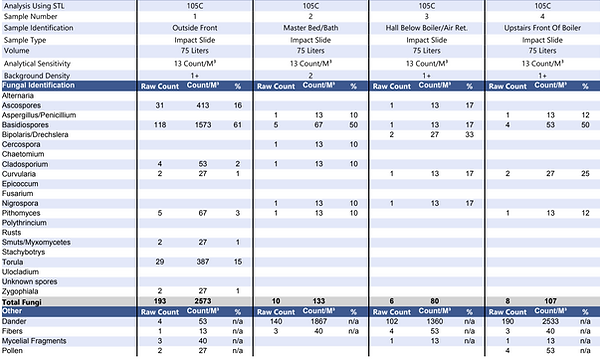
Samples are sent to an accredited laboratory for analysis, where the spores are identified and counted to determine the concentration of mold spores.
The testing results can be used to assess the severity of the mold problem and note the specific areas where mold growth occurs.
Comprehensive Reporting
Once we receive your test results, we will provide a comprehensive report to include the following:
- Detailed breakdown of test results
- Concise, informative written interpretation of data & findings
- Photographs of our inspection observations
- Recommendations regarding your next steps
- Remediation protocol suggestions, if deemed necessary
View a Sample Report
Frequently Asked Questions
When should I consider getting an indoor air quality test?
You should schedule a test if you notice a persistent musty odor when your AC or heating turns on, if you have recently experienced a water leak or flooding, or if occupants are experiencing unexplained health symptoms like respiratory irritation, headaches, or chronic fatigue. It is also highly recommended before buying a new home or after a major renovation.
How long does the air quality testing process take?
The on-site sample collection typically takes between 1 to 2 hours, depending on the size of your property and the number of rooms being tested. Once gathered, samples are sent to an accredited laboratory. You can generally expect your comprehensive report and data interpretation within 2 to 3 business days.
Do I need to prepare my home or business before the air quality test?
To ensure the most accurate results, we recommend keeping your windows and exterior doors closed for at least 12 hours prior to our arrival (normal entry and exit are fine). Avoid running portable air purifiers, vacuuming, or using heavy chemical cleaners right before the test, as these can temporarily alter the baseline particulate levels in the air.
What is the difference between air testing and surface testing for mold?
Air testing collects airborne mold spores and fine organic fragments to determine what you are actively breathing across different rooms. Surface testing (like tape lifts or swabs) identifies the specific type of mold growing on a visible, physical structure. We often utilize both methods to get a complete, accurate picture of your indoor environment.
If the test reveals elevated mold levels, what are the next steps?
Don't panic. Every comprehensive report we provide includes a clear, written interpretation of the data and a customized remediation protocol suggestion if it is deemed necessary. We will outline the exact areas that need attention and guide you on the proper next steps to safely restore your indoor air quality.
Can’t find what you’re looking for? Simply call our friendly staff at (919) 214-5000.